Monday, 2 September 2013

New England Vinyl Road Trip


I've not long since returned from a trip across the pond to New England with Mrs Shelf-Stacker and the short-stacks. All too predictably, I'd done my research before setting off and was moderately confident of finding the odd, half-decent record store during two weeks of driving on the wrong side of the road. I confess to having been a tad concerned that New England might be just a teensy bit too prim and proper to offer up the kind of vinyl pick-up joints that I crave, but I needn't have worried. I can happily report that, in addition to the innumerable clapboard houses and lobster shacks, the states of Massachusetts, Maine, Connecticut and New Hampshire are home to more record buying opportunities than any sane Englishman could ever expect a wife to tolerate on a family holiday.

In Your Ear, Cambridge, Massachusetts


There's nothing like an unkempt entrance to get me excited!


The first visit to a record store on a trip like this always presents a few dilemmas. Do I buy everything that catches my eye? Will I see the same LPs elsewhere, cheaper? Do I get an album that's high on my wishlist even though the condition isn't perfect, or do I take the chance that I'll find the perfect example further down the road? In Your Ear is a little gem. There's masses of stock, certainly too much for me to get through in the time I had available, so I'm haunted by thoughts of what I might have missed. The Rock section is extensive, with two rows of additional stock shelved under the main racks. The Psych section is small but perfectly formed: I know I walked away from a couple of albums that I should have grabbed when I had the chance but, fortunately, I can't remember what the hell they were. I left with ten LPs ranging in price from $0.99 cents to $5.99 including albums by Grand Funk Railroad, Mom's Apple Pie, Bob McBride, Five Dollar Shoes and Oregon. In a theme that repeated itself in record stores throughout New England, In Your Ear's staff were welcoming, helpful and really friendly.


Mine, Mystic, Connecticut

This place is not exactly a record store, more an indoor flea market-come-antique shop with half a dozen crates of vinyl of varying quality lurking amongst the crockery and jewellery. Pickings were slim when I was there, but who's to say what treasures might turn up at other times. Pricing is straight forward, with LPs at $4.00 a pop or three LPs for $10.00. I was happy to leave with three albums under my arm including Cher's 3614 Jackson Highway, the album she recorded at Muscle Shoals Sound Studio in 1969. It features covers of material by Dylan, Buffalo Springfield and Dr John: a world away from The Shoop Shoop Song!


John Doe Jnr Records, Greenfield, Massachusetts


Greenfield is somewhere that probably doesn't see too many tourists unless, like us, they're passing through on their way to the coast or the mountains. It's an honest, unpretentious, blue-collar town and, as such, I had high hopes for John Doe Jnr Records. To buy myself a bit of extra time I forwent lunch to concentrate on the serious job of crate digging. Before disappearing to a diner over the road with the sprogs, Mrs Shelf-Stacker spotted a pristine copy of Captain Beyond's Sufficiently Breathless for a very reasonable $15 (my most expensive purchase on this trip) and engaged the super-friendly proprietors in conversation. Kids in record stores, even ones as well-schooled as mine in how to behave around vinyl (Don't touch! Ever!), aren't always particularly welcome. The couple who run John Doe Jnr Records not only tolerated my kids using their store as a racetrack, but seemed to find them utterly charming. It may have had something to do with one of their children sharing a first name with one of my boys. Cool people! Prices here range from $2 up to $25 and beyond. The store is rammed with quality merchandise and the prices, from the perspective of someone used to overpriced UK record stores, are very reasonable. Many of the thirty LPs I bought here came from the $2 bins including albums by Mother Earth, Ian Matthews (a Vertigo swirl copy of Tigers Will Survive), Brian Auger, Pacific Gas & Electric and Lee Michaels. I also picked up a pair of 180 gram repressings for $10 apiece (Stone Circus and Josefus) and other vinyl ranging from $3 to $8. And, as if the prices weren't reasonable enough already, the owners gave me a generous discount at the till. I left Greenfield with a smile on my face.


Toonerville Trolley Records, Williamstown, Massachusetts


Undoubtedly the prettiest record store I've ever been in. The owner's carefully selected in-store soundtrack of Cool Jazz lends the establishment a relaxed, sophisticated air. Just the place then to pick up a copy of Grand Funk Railroad's E Pluribus Funk! A steal at $3.00! Add a sealed copy of Pig Iron's bluesy, horn-rocking debut from 1970 for $8.00 and a selection from the dollar bins and I'm more than happy. Next!


Arts Gift Shop, Stockbridge, Massachusetts


Stockbridge is exactly the kind of place that came to mind when I tried to envisage what New England might look like. Immaculate, white clapboard houses set in leafy lanes, teashops as far as the eye can see, picket fences, fluttering stars and stripes, sidewalks cluttered with slack-wearing octogenarians... In short, not somewhere likely to provide a digging opportunity. Well, you'd be surprised! Stockbridge has had its own brush with the counterculture. Tucked away in an alleyway beside the Arts Gift Shop is Theresa's Café, formerly known as Alice's Restaurant, immortalised in an Arloe Guthrie album and a film of the same name. Guthrie tells the true story of his arrest for littering by an overzealous, hippie-hating police officer and of his successful attempt to avoid being shipped out to fight in Vietnam. Judging by the sizeable stock of vinyl from the Sixties and Seventies that fills the many boxes upstairs in the Arts Gift Shop, Guthrie was not the only undesirable longhair in Stockbridge. Condition is a bit of an issue, with some of the LPs I passed over clearly having been poorly stored since they were last played, but at $15 for any four LPs, I couldn't miss with a shrink-wrapped copy of Bloodrock's debut, Savoy Brown's Raw Sienna, Edgar Broughton's Wasa Wasa and an album that I took a punt on because it looked intriguing, Definition by Chrysalis. It's turned out to be a stonking, fuzz guitar-fuelled slab of psychedelia and, I've since learnt, featured in a Shindig article last year entitled 50 US Psych Albums You Need To Hear where it's described as a "masterwork" and "an unalloyed gem". I can't argue with that! The Arts Gift Shop is well worth a visit. In addition to the records, it has a great selection of music, film and comic book related T-shirts, posters and memorabilia.


Pitchfork Records, Concord, New Hampshire


Okay, so my kids' behaviour in Pitchfork Records didn't exactly endear them to the owner, but he was still friendly and smiling when I handed over my cash. This is a store that I stumbled upon by accident and am I pleased that I did! I found albums here that have been on my want list for some time, including Don Ellis' Electric Bath and Billy Thorpe's Children Of The Sun. Prices range from $2 (or three for $5) upwards. The most I paid for an album was $8.00. If CDs are your thing, then there are acres of them in store too.


Enterprise Records, Portland, Maine


According to Tim, our Grand Funk Railroad-loving Portland Fire Engine Company tour guide (tourists + kids = sightseeing tour on the back of a fire truck), the town has shrugged off its recent down-at-heel past to offer a ton of reasons to pay a visit. The only downside of this is that it leaves little time to spend rooting through its record stores. The branch of Bull Moose in Portland stocks primarily CDs, DVDs, Games and overpriced new vinyl, so thirty seconds was all it took for me to decide it wasn't for me. Enterprise Records however is exactly my kind of store. Even though not overflowing with stock, what is in the racks is high quality and very cheap. I immediately spotted another Grand Funk LP to add to my collection for a paltry $0.75 cents and, albums by Cold Blood ($4.50), Big Brother & the Holding Company ($1.00), Bloodrock ($6.00) and Deep Purple ($8.00). I mentioned to the proprietor in passing that I had no idea how I was going to get all my LPs back to the UK and he promptly dug out a perfectly proportioned box for me which would easily accomodate seventy LPs. What a nice guy! I promised I'd spread the word about Enterprise Records. It's a great little digging spot! Pay a visit if you're in Portland.


Bull Moose, Portsmouth, New Hampshire


Yes, the man on the right really is that tall!


Unlike Bull Moose in Portland, the Portsmouth branch, has a very healthy stock of used vinyl. I managed to find so much quality stuff in the $3 section that I hardly had time to glance at the main stock. It may well have yielded some choice items, but much of what I saw seemed overpriced considering the treasures I was digging out of the cheapo racks. I ended up coming away with another twenty-one LPs including classics from Moby Grape, The Guess Who, Matthews Southern Comfort and The Sweet. I also found another LP that was high on my wishlist, namely Fusion by Michal Urbaniak. To describe this album as Jazz Fusion doesn't do justice to the experimental insanity of the music it contains. Again, the store staff went out of their way to be friendly and helpful, pointing out the various sections and signing me up to their frequent customer scheme for a discount on my purchases despite being made aware that the seven hour flight pretty much guarantees that I won't be a regular customer.


A few choice items from the haul


Getting ninety-one LPs back from the States unscathed ended up being less of a problem than I expected. A few went in my hand luggage. The aforementioned box, a roll of gaffa tape and thirty feet of bubble wrap ensured that the rest were well protected. The US Department of Homeland Security decided to check out the contents of the box after I had checked it in at Boston Logan airport. The only evidence that they had taken an interest in it was a bunch of stickers on the outside, so I presumed they'd given it a bit of a shake, let an Alsatian sniff it and waved it through. It wasn't till I cut through the thirty feet of bubblewrap at home and found an explanatory leaflet inside the box that I realised they'd been through the contents. That's stealth for you. I still don't know how they got in without seeming to have removed any of the gaffa tape or bubblewrap. I guess David Blaine is on the payroll.


I have to give credit and thanks to the creators of the indispensable Vinyl District iPhone app which led me to record stores that, without its help, I would never have known existed. Get it on your phone now. It's FREE.


Sunday, 4 August 2013

Re-imagining The Beatles #5 - John Keating

Although vastly superior to the better known Walter Carlos Switched On Bach Moog showcase, John Keating's two Space Experience albums operate in roughly the same ballpark, that is, the reinterpretation of well-known tunes with the aid of some of those newfangled, in the early 1970s at least, synthesizer thingies. Keating's LPs reflect the prevailing fascination with the moon landings and the optimism that man's explorations in outer space had generated. In the Seventies, new music technology, in the form of the synthesizer, would prove to be the catalyst for a tidal wave of sonic experimentation and the kind of explorations of inner space that guitar effects and multi-track recording had facilitated in the 1960s.

Space Experience - Mexican, Quadraphonic pressing


A respected musician and arranger for Ted Heath's Big Band as well as for artists such as Adam Faith and Petula Clark, John Keating is perhaps best remembered for writing the theme from the TV cop show Z-Cars. His Space Experience LPs could often be heard putting amps, speakers and turntables through their paces in hi-fi stores in the 1970s. The superior recording quality and stereo imaging made the records a shoo-in for use as demonstration discs. I wonder how many Pioneer record decks and Trio receivers were sold as a result?


Although not enjoying the credibility of synth experimentalists Kraftwerk, Tangerine Dream or the BBC Radiophonic Workshop, Keating's LPs hold up pretty well. Whenever a Space Experience track looks in danger of tipping too far into the realms of cheese, a fuzz guitar break or a flurry of Techno-anticipating farts and bleeps will haul it back from the brink. Keating employs a selection of ARP synthesizers alongside a troupe of highly respected session musicians to create a simmering casserole of Lalo Schifrin and John Barry-esque soundtrack music, space-age Lounge tunes and Blaxploitation Funk, infused with Techno squelches, wah-wah guitar and nascent electronica. Unlike Switched On Bach, some of the tracks on the Space Experience LPs are originals. Far from being filler, Keating's tracks are definite highlights.


Lucy In The Sky With Diamonds has a guitar sound that immediately brings to mind Brian May, albeit in the context of a track which oozes a strong whiff of fromage. The simplistic synth line on the chorus is perhaps a touch too cheesy, but the trippy sounds elsewhere more than atone for this minor misstep and make for an interesting take on the Beatles' classic. A cover of the Star Trek TV theme features heavily orchestrated strings to complement the burbling synths and whacka-whacka guitar funk. The Unknown Planet, a Keating original, is part Bond theme, part Sixties spy show soundtrack, part psychedelic loungecore and undoubtedly the highlight of these two discs, with everything but the kitchen sink employed in its sonic palette. Of the two LPs, the first Space Experience album is the superior beast. By the time of the second LP, the insidious influence of the emerging disco scene had led Keating down a path of over-orchestrated, Barry White and Love Unlimited Orchestra-style, easy listening disco-lite on too many of the tracks.


Wednesday, 3 July 2013

Got It Taped!


There are so many petty irritations in life: finding that a bird has emptied itself on my parked car; emptying my own bowels before realising that my kids have used the last of the toilet roll; TV programmes that feel the need to constantly recap what I have just seen (I'm not a bleedin' goldfish - I can retain information long enough to follow Dickinson's Real Deal unaided!); people who think the eighth letter of the alphabet is pronounced 'haitch' and those who think 'mischievous' is pronounced mis-cheev-ee-ous (where the hell are you getting that extra ee sound from?).... I could go on, and very often do, but by far my biggest gripe is when I buy an LP and find that a previous owner has decided to festoon the sleeve with yards of sticky tape in some deranged attempt to protect it from damage.  Guess what dickhead, you just damaged it!


If this sleeve vandalism pisses me off so much, why would I buy an album that's been modified in such a way? Well, I wouldn't knowingly, but some ebay sellers don't feel the need to mention this particular modification in their descriptions. My National Head Band LP came with a particularly unpleasant brown packing tape adorning every straight edge. The tape's sufficiently ancient to be drying up and lifting in some places whilst clinging on like a treacle-oozing limpet in others. Do I attempt to remove it or put up with this unsightly, sticky mess? No question: it's got to go!


In my experience this form of sleeve trashing is peculiar to records from the 1970s, and I have a hunch that the people who perpetrated this crime are the same ones who felt the need to cover their school text books and jotters with wallpaper during that decade. It's entirely possible that you have no idea what I'm talking about, but I can't believe that I'm the only one with memories of kids at school who got out the sellotape and whatever old scrap of wrapping paper they could cadge off their mums to fashion a bespoke dust jacket for their copy of Stig of the Dump. Maybe sellotape (Scotch tape if you're from over there) was a bit of a novelty in the Seventies and nobody knew when to leave it alone. If you're really unlucky, you might pick up an LP where someone's gone mad with the Dymo label machine, punched out their name on one of those little sticky plastic strips and stuck it to the sleeve. That little bugger ain't coming off!

Sleeve Killer


Thursday, 20 June 2013

Vintage Trouble (and Strife)

It took me a while to warm to Vintage Trouble. I tossed Classic Rock magazine's freebie sampler CD onto the reject pile after one play and forgot all about them. Then, last year, I happened upon a cheap copy of their The Bomb Shelter Sessions album on vinyl and figured that I could always sell it on if it failed to move me. It's going nowhere: what a fantastic LP!


Combining elements of Soul, Blues and Rock, but with the emphasis most definitely on Soul, The Bomb Shelter Sessions is a complete breath of fresh air in an era where most backwards-looking bands settle for apeing their Sixties and Seventies heroes rather than using them as the inspiration for creating something new and vibrant.

Classy on record, in a live setting Vintage Trouble prove that they are undoubtedly world class. It's no accident that both The Who and The Rolling Stones have been falling over themselves to enlist them as special guests on their respective tours. I dragged the (vintage) trouble 'n strife (Mrs Shelf-Stacker) along to the Electric in Brixton on Monday night to check out their show. And a show it most certainly was, with a captivating, perfectly-paced set that delivered soul, groove, humour and strutting sexual energy. The band seamlessly combined material as diverse as the intimate and delicate protest song Not Alright By Me with the rocking fireworks of Blues Hand Me Down without ever abandoning the Soul at the core of their DNA.


Vocalist Ty Taylor has a once in a generation voice that is equal parts Al Green, Otis Redding, Terence Trent D'Arby and Ben Harper. His boundless energy and between song patter make him a thoroughly arresting frontman. Don't be fooled into thinking that his musical accomplices are a faceless backing band though, not with such engaging personalities to complement their musical chops and unwavering groove. Special mention must go to Nalle Col's slide guitar on Run Baby Run and to drummer Richard Danielson's moustache which looks like it was stolen from the set of Deadwood. Spectacular!


Monday night's gig was one of those where the audience hung on every word, sang along to every lyric, punctuated every beat with their raised hands and noisily acknowledged the band's stellar performance. I can't claim that everyone in attendance on Monday night was united in their enthusiasm. Sadly, Mrs Shelf-Stacker spent half the evening thumbing her Blackberry. If only that was some kind of a sexual euphemism! But no, she just didn't get it. Not one bit. Obviously there weren't nearly enough galloping riffs, songs about Satan or moments of foot on the monitor posturing! Perhaps Vintage Trouble could address these issues before they tour again.


What better reason to bring the Face Fungus-ometer out of retirement than that magnificent 'tache!

An aptly Deadwood honouring, Western-themed Magnificent Seven!

Monday, 10 June 2013

Panning For Charity Shop Gold


(£150) Record Collector RRPG 2014
 
Nothing increases the pleasure of adding a rare vinyl treasure to my collection like getting hold of it on the cheap. This eventuality seems ever less likely when my local Cancer Research Shop thinks that a copy of Phil Collins' No Jacket Required LP deserves a price tag of £15 - I kid you not! I can't think of any scenario in which an album as ubiquitous as that could demand that sort of money (unless there's a twenty quid note tucked in the sleeve.) However, overpriced Phil Collins albums not withstanding, I did have a spot of luck three years ago when I stumbled into a charity shop on a morning when someone had clearly chosen to offload the carefully selected LP purchases of a misspent youth. My heart pounded in my ears as I flipped through classic after classic from the late 1960s and early 1970s. These weren't reissues either! Part of me feared that it was all a set-up, some kind of a candid camera stunt: no sooner would I carry the LPs to the till than their presence in the shop would be revealed as a honeytrap to get cheap laughs at the expense of this gullible vinyl junkie. Of course I wasn't thinking straight as it would have made for terrible TV. Amongst the 26 LPs I skipped home with that day were two copies of the Rolling Stones' Between The Buttons, a hologram-covered Their Satanic Majesties Request, a mono Beatles For Sale, a pink Island label copy of Fairport Convention's Liege & Lief,

(£150) Record Collector RRPG 2014

a first pressing of Tommy by The Who, Donovan's A Gift From A Flower 2LP box set, a first pressing of Nick Drake's Bryter Layter and, most excitingly, a beautifully-preserved, mono, first pressing of Pink Floyd's Piper At The Gates Of Dawn (worth £700 according to Record Collector's Rare Record Price Guide).

(£400) Record Collector RRPG 2014


(£700) Record Collector RRPG 2014

At a quid a throw, I'm obviously going to hell if I ever sell any of these and don't make a charitable donation. The same shop, five months later yielded first-press Led Zeppelin, Free, Hawkwind, Family and Quintessence LPs. Since then, nothing more thrilling than a Mrs Mills Hammond Party album.

The trouble with being a vinyl junkie is that, like all junkies, I'm always looking to revisit the perfect high. I had started to think that the serendipity of discovering rare records in the land of scratched Des O'Connor LPs was a once in a lifetime, never to be repeated, piece of good fortune. I figured that I could add it to a bottle of reflux-inducing tombola-prize Pomagne and a £5 scratch card win to my back-of-a-postage-stamp list of good luck moments. I seem to remember scraping away at the winning scratch card on the hard shoulder of the M1 while waiting for National Breakdown to rescue me and my terminally ill VW Scirocco, so strike that one from the list of lucky moments. However, Lady Luck has smiled on me once more, or rather, my dogged perseverence has paid off, because a few weeks ago I scored a near mint first pressing of Dark Side Of The Moon (easily identified by the solid blue triangle on the record labels and the A2/B2 matrix), in a West London charity shop for a tenner.

(£500) Record Collector RRPG 2014
Perhaps this comes across as smug and boastful. It's not intended that way. The point I'm trying to make is that collecting records is like panning for gold: you have to have the patience to sift through endless run of the mill dross in order to stumble upon these little treasures. In the end, the music's what really matters, but hell, I do love the thrill of the chase!

Thursday, 16 May 2013

Moth Mk II Pro Record Cleaning Machine


It's a no-brainer: if you buy second-hand vinyl and want to hear it at its best, you need to clean it thoroughly before attempting to play it. As well as getting rid of a load of extraneous noise, this has the added bonus of prolonging the life of your stylus. For years I've been cleaning all my records with the aid of an ancient, non-functioning Garrard turntable, turning the platter by hand whilst working cleaning fluid into the record's grooves with a brush, followed by a rinse with de-ionised water. This has been effective, albeit labour-intensive. The hardest, and least satisfactory part of the process has been drying the records after cleaning them: a thorough going over with cotton make-up removal pads does the job but, apart from being incredibly tedious, I was always concerned that this might be pushing debris back into the grooves that I was attempting to clean.

The defunct Garrard


In January of this year I decided to bite the bullet and invest in a record cleaning machine which sucks out the gunk at the end of the cleaning process and vacuums the grooves dry. The cost of these contraptions has always been a hurdle that mentally I had to overcome, but with 4,000-plus LPs in my ever-growing collection, I finally came to realise that I needed a speedier, more effective cleaning method, particularly as I help to finance my vinyl habit by scouring charity shops and boot fairs for records to sell online, all of which need cleaning.

The Moth Mk II Pro Record Cleaning Machine is one of the more affordable machines on the market that features vacuum suction. There is a cheaper DIY kit available for those who are confident that they can build the housing from scratch, but, apart from the fact that my carpentry skills are somewhat limited, all the pictures of successfully assembled kits that I've seen look like something hastily knocked up for the purpose of burying a dearly-departed family pet. Ready assembled, the Moth comes in a black steel enclosure: not a thing of beauty, but neat, robust and reasonably discreet. More attractive than a beaten-up, plastic, wood-effect Garrard turntable and most definitely easier on the eye than some of the function-over-form DIY kits I've seen! If you have four figures or more to spend on a record cleaning machine, Keith Monks, Clearaudio and Loricraft manufacture devices that will perform the same task as the Moth, but with a degree more sophistication and automation. For £550 I got a Moth delivered to my door with fluid, a brush, Nagaoka inner sleeves and replacement vacuum tube pads. The brush provided is very poorly made. Mine fell apart after 5 minutes, leaving sharp metal edges exposed worryingly close to the surface of the record I was cleaning. I've been using the brush that came with an ancient Parastat Record Cleaning Machine (a bit of a misnomer unless you consider a wet brush to be a machine) and have found it to be highly effective. I find carbon fibre record cleaning brushes superb for a quick dry clean of records immediately prior to playing them, but a bit soft of bristle for a deep, wet clean.

Parastat Record Cleaning Machine

The Moth is a doddle to use. There is no platter, just a record label-sized platform to which the record is clamped. This prevents debris from the uncleaned side of the record contaminating the cleaned side when it is flipped over - certainly a problem that I encountered when using the Garrard.


A small amount of the provided Moth record cleaning fluid is brushed into the record grooves whilst the motor turns the record first one way, then the other - 2 to 3 rotations in each direction is sufficient to loosen most muck - then the record is flipped over and vacuumed dry from below while you clean the other side. You will find that if you use too much fluid, it may take an extra rotation or two to completely dry the record. I prefer L'Art du Son record cleaning fluid because it is enzyme-based, the Moth fluid being alcohol-based. I've no evidence for it, but my gut feeling is that alcohol might, over time, have an adverse effect on the vinyl. I have noticed though that records cleaned with the Moth fluid dry with fewer rotations as the alcohol starts to evaporate as soon as it is spread on the vinyl.

The Moth in action

One point to note with the Moth is that the record clamp needs to be secured really tightly - and I mean REALLY TIGHTLY!!! - to prevent the clamp from coming loose as a result of a combination of vibrations from the motor and the force of the brush working in the opposite direction to the rotation of the platter. A better designed clamp, one with finger grips, or a rubberised surface would make the tightening and subsequent unscrewing of the clamp so much easier. Another point to note is that the Moth is loud - head in a jet engine loud! It makes sense I suppose that what is essentially a domestic vacuum cleaner in a metal box is going to be noisy, but don't expect to be able to listen to music or watch TV while cleaning your records, or for that matter hear the doorbell when your neighbours complain. Wanting to preserve what scrap of my hearing I have retained, I have taken to wearing industrial ear defenders when I am hunched over the Moth. The first time I used it I didn't take this precaution and I lay in bed that night with my ears ringing like I'd spent the evening at a Motörhead gig. No joke!

Essential ear gear

The Moth is designed for cleaning LPs, but a kit is available on ebay that adapts it for 7" and 10" discs. The problem that the kit addresses is the lack of sufficient suction from the vacuum tube. When a 7" single is placed on the clamp spindle, there is a portion of vacuum tube left exposed which would normally be covered by an LP. This causes a drop in suction and, subsequently, less efficient drying of the vinyl. The kit also contains a selection of adaptors to protect different types of record labels from damage that could, potentially, be caused by over-tightening the record clamp. I'm sure the kit provides excellent solutions to the problems it claims to address, but being the tight arse that I am, I decided to attempt a DIY solution. I found that the handle of a 2 litre plastic milk bottle, when cut to size wraps around the vacuum tube perfectly and is made of sufficiently thin, flexible plastic to create a tight seal when the vacuum is switched on. I attempted to address the issue of potential label damage by cutting out a small, circular piece of 3mm-thick, rubberised, gasket cork to slot over the spindle between the record label and record clamp, but found that it was too thick to allow the clamp to be tightened sufficiently to secure the LP. A second attempt utilising a disc of thin plastic cut from an Indian takeaway box has been far more successful: it effectively acts as a washer between the clamp and record label, allowing both easier tightening and loosening of the clamp. It has the added bonus of being transparent, so the label can be seen during the cleaning process.

DIY Moth accessory kit


I use a syringe to accurately apply the cleaning fluid to the record, so I'm not overly concerned with covering up the whole of the label to protect it from splashes, but it would be easy enough to cut a larger protective disc if needed. I have bent up one edge of the disc to make it easier to lift off after removing the clamp: not elegant, but preferable to scratching away with a fingernail to remove the protective disc from the label. The ebay kit, incidentally, retails at £29. My kit is cheaper and comes with free cow juice and curry. One addition I have made to the Moth is to cut a piece of velvet to size and glue it to the end of the vacuum tube closest to the clamp spindle to extend the vacuum tube pads. On records that aren't completely flat (even the ones that look perfectly flat rarely are) the end of the vacuum tube can sometimes rub against the dead wax in the run-out grooves during the vacuuming process and leave light scratches which don't look great and can even create an audible tone at the end of the record. The additional piece of velvet prevents this from happening.

The label-protecting disc doing its job


Whenever I read other collectors' advice on cleaning records, they are forever talking about protecting the labels from the cleaning fluid, but nobody ever makes any mention of cleaning the labels. It stands to reason that if the vinyl is dusty, mildewed and covered in crud, then the labels will be too. What's the point in sticking a cleaned record into a pristine Nagaoka inner sleeve if the label is still grubby? I always wipe a dry cotton make-up removal pad over both labels prior to cleaning the record in order to remove any dust and debris that may be present. And I'll happily use a barely-damp cotton pad on the labels if there are any stubborn marks or signs of mildew that need to be shifted.

I can wholeheartedly recommend the Moth to anyone who buys used vinyl, but it's useful too for new records as it will remove the mold release agent often left in the grooves of newly manufactured LPs - I've noticed a significant improvement in the detail and clarity of sound from new wax that I've cleaned on the Moth. A case in point is the recent Omnivore label reissue of Jellyfish's Spilt Milk. I've been somewhat critical of the quality of this pressing in the past, but the Moth has helped to retrieve some of the detail that had been lost in whatever gunk lurks in the grooves of newly pressed vinyl. If nothing else, you want to ensure that your expensive stylus has to plough through as little crap as possible to get at the music buried in the grooves. The machine does get hot with use, but the makers claim that the benefit of the MKII Pro version of the Moth is that the cooling fan housed within it allows extended cleaning sessions without the risk of over-heating.

The finished article: not bad for a 30 year-old record!


I won't claim that cleaning my collection has become fun, but the partial automation of the process has certainly made it quicker and less tedious than before, and the results, in terms of increased clarity and depth of sound, are often spectacular. The majority of people seem happy to accept that some of their CDs stutter and skip, but those same people continue to trot out the usual hackneyed criticisms of vinyl: that it scratches easily and suffers from pops and crackle. That's like never changing the oil in your car and then criticising its reliability. If you care about it, look after it! I have albums that I bought over thirty years ago that have been played hundreds of times on equipment that doesn't come close to the quality of what I currently own, and they play now with the same warmth and clarity that they did the first time I listened to them. The Moth is giving me the chance to get that same level of playback quality from records that have been neglected by their previous owners. I wouldn't be without it!

Saturday, 20 April 2013

33-and-a-blurred


 Hey, it's Record Store Day! Yeah, whoop! To me, every day is record store day. I appreciate the organisers' efforts to boost the profiles of both vinyl and the ever-dwindling tally of record stores, but I've never fancied camping out with all the opportunistic chancers and having to fight them for the limited vinyl releases that always seem to be on eBay within five minutes of leaving the store. These people are no better than ticket touts. How about leaving the Record Store Day releases for real fans! There's nothing wrong with selling on your surplus vinyl, but denying a true music lover the chance to own a special slab of wax from their favourite artist just so you can make a quick buck strikes me as pretty scummy behaviour. At the other end of the marketing scale there are plenty of legit sellers on eBay who could use a few lessons in maximising the sales potential of their wares.

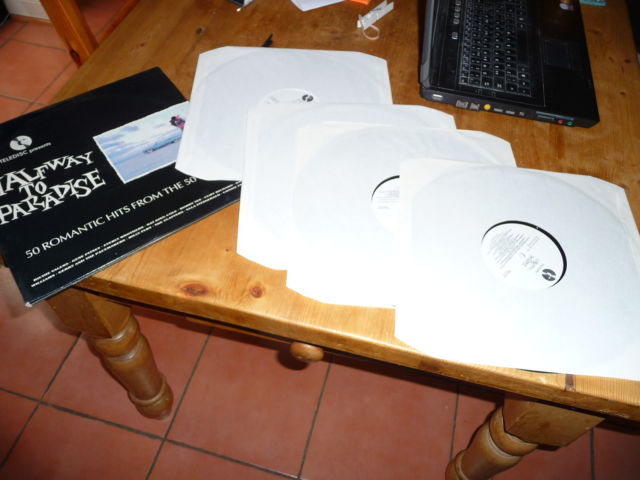
When I'm browsing the vinyl listings on the 'Bay, I'm often left dumbstruck by the way some of the vendors present the items they have for sale. I've collected a random sample of godawful, genuine photographs from ebay listings over the last week or so to illustrate my point.

This vendor deserves credit for managing to photograph his Neil Diamond LP from the window of a speeding train...


What are you selling, records or home furnishings?..


Turn off your flash, for crying out loud!..


A selection of LPs possibly photographed under the influence of alcohol. I searched in vain for a similarly blurry copy of Foreigner's Double Vision. That would have been too perfect! 


The lack of focus in this shot can't disguise the huge tear in the sleeve...


Bob Dylan, blurred and jaundiced...


You'll be surprised to learn that none of these albums achieved a sale.