Tuesday, 29 November 2011

Plastic Wax Records

It had been a while since I pointed the jalopy down the M4 but, a couple of weekends ago, the Shelf-Stacker clan headed to the West Country. Aside from good wine, great company and a very competitive late night Guitar Hero session on the PS3, we found time to visit one of my favourite haunts in Bristol, that is, Plastic Wax Records. This is an absolute goldmine of a second-hand record store crammed with a huge variety of chaotically arranged vinyl and CDs. The owner completely ruins the prevailing image of record shop owners as miserable misanthropes by being friendly and charming with a ready smile. The stock is reasonably priced and, with the Plastic Wax loyalty discount card, I am invariably pleasantly surprised to find that I don't have to lie to my wife about how much money I've spent.


 My modest haul consists of LPs by Tandy & Morgan, Stackridge, Groundhogs, Birtha, Ray Gomez, Pentangle and Camel. Some of them are caught up in a backlog of yet-to-be-played vinyl, but the big surprise is just how good the first Stackridge album is.


On the subject of Stackridge, I've never quite understood the attitude of some of the more po-faced Prog Rock fans who criticise progressive albums that have a light-hearted, quirky or, whisper it, commercial feel to the material. Don't like them? Then don't listen to them. Simple. My musical life has been thoroughly enriched not only by the likes of King Crimson but by accessible, song-based Progressive Rock by Kayak, Supertramp, Ambrosia and latter-day Genesis. Do I prefer 'Invisible Touch' to 'Nursery Cryme'? No. Do I wish that Genesis were a bunch of robots churning out facsimiles of Supper's Ready ad infinitum? Definitely not. Why do fans get so bent out of shape when, in the course of their careers, bands change, adapt and, dare I say, 'progress'? One man's selling out is another man's progression. And, if you'll allow me to head off on a slight tangent, what is the point of wasting your energy willing a Led Zeppelin reunion into being? Robert Plant is constantly pushing boundaries and challenging our perception of who he is with his solo albums and collaborative projects. Do we really want a predictably pedestrian reunion album to sully the amazing body of work that Led Zep produced when John Bonham was still powering the band? Similarly, how about leaving Ritchie Blackmore alone! So what if he wants to dress as an elf and make lute music for comely wenches and morris men. He's bloody well deserved the right to disappear up his own backside into whatever parallel universe takes his fancy. What could possibly be worse than the man who had a hand in creating In Rock and Rainbow Rising succumbing to pressure and strapping his syrup on for a final money-grabbing Deep Purple or Rainbow reunion tour? Do you really want the man in black to 'treat' us to a grudging rendition of Smoke On The Water when his heart is really in Camelot? Careful what you wish for! The alternative to leaving the artists to decide what direction their careers go in is to follow Ozzy Osbourne's lead. Recently he changed the proposed title of his album prior to release because a bunch of fans online said they didn't like it. Boo-hoo! Art by committee? Love you Ozzy, but give me strength!

Sorry, I'm not sure what came over me. Let me put my soapbox away and get back to the Plastic Wax haul. The Ray Gomez LP is one I've been after for some time, his guitar playing being highly praised by those in the know. Volume, his debut and, as far as I know, only album, is an interesting amalgam of sophisticated west-coast AOR and jazz-rock fusion with some scorching guitar work. Let's put it this way, Jeff Beck's Blow By Blow graced the turntable immediately after Volume, and Gomez certainly wasn't left embarrassed by his proximity to the great man. The Groundhogs LP I had to have as the CD copy I own just seems lacking in some way. On vinyl Split really comes alive, putting the listener in the studio with Tony McPhee's blues rock mob. Somehow the CD manages to stick the band in a perspex box, preserving the performance but shielding the listener from all the sweat and fireworks that are so much a part of the original vinyl. I've yet to give the Birtha LP a spin as it needs a good clean, but if it's anything like their debut effort, it'll be a gem. Their self-titled debut is certainly better to my ears than anything that Fanny, The Runaways or Girlschool ever released. In fact, I shouldn't fall into the trap of comparing them to other all-girl groups as they are the equal of many a hairy-chested, testicle-enhanced, hard-rocking outfit. The Tandy & Morgan LP is another that's been high on my 'want list' for some time, purely for the Electric Light Orchestra connection. I'm always hungry for an ELO fix in whatever form it takes. Check out this selection from my Bristol digging expedition and, by way of a bonus, a track from that first Birtha LP. Don't expect any Groundhogs though: if the sweat and fireworks didn't survive the transfer to CD, MP3 has no chance!


Thursday, 10 November 2011

High Fidelity With A Northern Accent

On BBC Breakfast this morning I chanced on an interview with film director Jeanie Finlay and the owner of Sound It Out Records in Stockton On Tees, Teesside. 


Jeanie has a documentary film out, Sound It Out: The Very Last Record Shop In Teesside, UK, which has been described as "High Fidelity with a Northern Accent". On the official website at http://www.sounditoutdoc.com/ you can watch a trailer for the film, check to see if there is a screening anywhere near you and request one if not. Do what you can to support Jeanie's heartwarming documentary and make it this year's The Story Of Anvil.

Thursday, 3 November 2011

Re-imagining The Beatles #2 - Richie Havens

Richie Havens had the honour of opening the Woodstock Festival on 15th August 1969. Or perhaps he just pulled the short straw as he had to extend his set and improvise new material to keep the crowd entertained while other artists on the bill struggled to get to the besieged festival site. No pressure then! This wasn't Altamont: I imagine that the blissed out Woodstock crowd was very receptive to Havens' brand of psychedelic folk. All three hours of it.

The only person at Woodstock not out of his tree
 
Just a couple of months prior to his epoch-defining spot of rural busking, Havens released his most 'electric' LP yet in the shape of Richard P. Havens, 1983 which, as was the norm for a Richie Havens LP, featured a plethora of covers of other artists' work. And, typically, he made the songs his own. Of the four Beatles tunes on this double album, I have chosen the seldom-covered She's Leaving Home to share with you here. While you're at it, check out that great psychedelic sleeve photography. 


The green hue to Richie's skin, his repose and the name and date format of the album title give the impression that this photograph is a memento mori, the album an epitaph, not a leaping off point for an artist who would shortly perform at Woodstock and would still be making music in 2011. Richie's corpse-like complexion is thanks to the vogue for infrared photography that was popularised by the photographer Karl Ferris on the cover of Donovan's A Gift From A Flower To A Garden boxset and the US version of Hendrix's Are You Experienced LP. The photos of Richie Havens here aren't by Ferris, but by Mark Roth, a multi-talented composer, producer and photographer who receives four co-writer credits on Richard P. Havens, 1983 as well as a co-production credit. With tracks of the quality of one of these co-writes, The Parable Of Ramon, it's somewhat surprising that Havens relied so heavily on covering other people's songs. See what you think of it. I apologise for the crackles and pops throughout these recordings. That's what happens sometimes when you buy a 40-plus-year-old LP for a quid. I don't find the background noise intrusive. If you do, I suggest you imagine yourself sprawled in the grass at Woodstock (adopting a similar pose to Richie on the LP cover) bathing in the beauty of his music with the gentle accompaniment of the pops and crackles of a campfire adding to the festival vibe. Enjoy!

Thursday, 27 October 2011

Hairy Hoodoo Men

Back in January when I started this blog, I revealed that an eye-catching facial appendage prominently displayed in a band portrait is often enough to persuade me to take a punt on an album, especially if that album dates from the late 1960s or the 1970s. This rule of thumb still helps lead me to some superb music, but once in a while the reverse happens. That is, I discover some spectacular facial hair as an unexpected bonus when I buy an album for the music contained therein. Birth Control's Hoodoo Man is one such album. Nowadays, facial hair, however off-the-wall, has become formulaic: it's part of the uniform of an alternative lifestyle along with tattoos and piercings. In the 1970s being in possession of an extravagant jaw cosy meant that you were probably a bit mental.


The Heinz Dofflein illustration on Birth Control's Hoodoo Man LP sleeve is like a Robert Crumb fantasy that's gone horribly wrong. It's not the kind of packaging you would usually expect for an album with a whiff of Deep Purple MkII's sound. Where's the self-aggrandising Mount Rushmore parody of In Rock or the cosmos-conquering meteorite of Fireball? Once you open up the gatefold sleeve you begin to understand why these Hammond-heavy Krautrockers might have opted for the bizarre over the iconic: they're all bonkers.


The Deep Purple comparison, however valid, is a bit of a lazy one based on the prevalence of Hammond organ throughout the LP. I hear sonic doffs of the hat to many heavy progressive bands of the era. That's not to say that Birth Control lacked originality, it just helps to have a convenient peg to hang that hat on when describing their sound. Of the two tracks presented  here, the first, Buy!, begins in promising fashion with an explosion. You can't go wrong with an explosion! Over the course  of its seven plus minutes, the track incorporates a fluid, mellow, funky bassline, tempo changes, a King Crimson-esque freakout featuring Mini Moog(?), a slide guitar solo and a Hammond / guitar duel. What's not to like? Gamma Ray, clocking in at almost ten minutes, opens with the sound of a spaceship taking off, followed by a spoken, scene-setting intro before the track settles into a relentless head-nodding, shakers and tom-toms, Bo Diddley rhythm. We are treated to lashings of Hammond organ and a rasping vocal underpinned at all times by that cosmic jungle beat and a subtle wah-wah guitar flavouring which morphs into something more primal as Bruno Frenzel unleashes a cry-baby solo akin to Uriah Heep's Mick Box at his best. A single manipulated piano note brings the solo to an end and introduces a hoodoo voodoo percussion-fest featuring maracas, timbales, congas, kit and kitchen sink. A quick guitar and vocal-scat duel, a verse or two and the Bo Diddleys take us home. This one really hits the spot!


It would be criminal not to bring out the Face Fungus-ometer for these fellas...


...And madness not to award them the FF-O's highest accolade!

Saturday, 15 October 2011

Camilla: The Metal Years

Long before she hit paydirt by marrying renowned tree whisperer and Three Degrees fan, Prince Charles, Camilla Parker Bowles had a couple of other strings to her bow. 

Camilla Parker Bowles

Her long-standing role as Audrey Roberts, the glamorous hairdresser in ITV's Coronation Street, is well documented, but her brief dalliance with hard rock has been hushed up by an embarrassed Royal Family.

In Character As Corrie's Coiffeuse

The year was 1981, a difficult time for the Duchess-in-waiting as she watched the man she loved marry another woman for no other reason than her face looked better on the souvenir tea towels and shortbread tins that otherwise sane individuals would buy by the truckload that year. Oh, okay, one other reason: she was already married to some bloke. People do crazy things for love, but how many have gone so far off the rails that they have formed a melodic hard rock supergroup with John Oates of Hall & Oates fame and Manowar's Scott Columbus (R.I.P.) in a desperate attempt to blot out the pain of a broken heart. How many? One: Camilla Parker Knoll. Clearly we can see from the album cover photo that Camilla, second right, is not a happy bunny.


Even in her disturbed state the future Mrs Wales had the presence of mind to disguise her appearance. The record-buying public and her fellow band members alike were blissfully unaware that the burly rocker was in fact a woman. The clues are there: the copious bingo wings, the studded choker hiding the non-existent adam's apple and the poorly strapped down puppies. Tracked down by husband Andrew to a seedy rehearsal space in Philadelphia, Pennsylvania, an emotional and confused Camilla returned to the U.K. and attempted to rebuild her life. Who knows what dizzying heights her band, USA, might have scaled if Camilla had remained 'unfound' because, contained on their sole LP, are ten fair to middling stabs at melodic rock, a couple of examples of which you can hear below. I suspect Camilla had a hand in writing Can't Get You Out Of My Mind.


It's been far too long since the Face Fungus-Ometer made an appearance and, quite frankly, I miss it. Don't expect a high score for USA in the facial hair department despite Scott and John's efforts, because, let's face it, they're at a disadvantage having a woman in the band.


A respectable five! A big thumbs up though to Scott and John for their 'tache and superhero leotard combination. Pure class!

Sunday, 9 October 2011

Re-imagining The Beatles #1 - Pot Liquor

One of the marks of a great song is its ability to stand up to re-interpretation by other artists and in some cases to scale new heights in their hands. Don't shoot me for suggesting that Badfinger's Without You is a mediocre performance of a superb song which only revealed its true beauty when Harry Nilsson made it his own. Pete Ham admitted that Nilsson's rendition of his song was "the way we wanted to do it, but never had the nerve." The Beatles' With A little Help From My Friends suffers, some might say, from Ringo Starr's naive, tonally-challenged vocal, which manages to disguise the quality of the composition. Thank God that Joe Cocker was able to recognise the song's potential and gave the world one of the greatest Beatles covers to date. To call it a cover doesn't perhaps do it justice as Cocker's reinvention of the song launches it into the stratosphere. The fact that such a great song was handed to Ringo to sing on Sergeant Pepper attests to the embarassment of songwriting riches in the Beatles camp.

I seem to recall reading somewhere that Yesterday is the most covered song of all time, with versions ranging from instrumental Tijuana Brass-style interpretations to reworkings by Elvis, Dylan, Sinatra and beyond. In recognition of the wealth of Fab Four covers that exist, today sees the first in an ongoing series of posts featuring unusual, surprising, and downright wonderful re-workings of Beatles songs. It's up to you to decide which category they fall into.


Here's Louisiana band Pot Liquor's interpretation of Lady Madonna. To my ears, their version invests the song with a Little Feat / The Band vibe. There's blues and hard rock influences aplenty on this LP, but there's also a heavy dose of what would now be termed Americana. See what you make of their take on The Beatles classic.


Wednesday, 28 September 2011

Welcome To The Máquina!

I love the Internet. Without it I would never have tracked down this great little record shop on a recent trip to Cantabria in Northern Spain. 


The shop in question, Boikot in Santander, would be a tough one to stumble across without some prior knowledge of its existence as it's hidden away on the first floor of an apartment block, accessible only to those who discover the intercom in the stairwell and get buzzed in by the proprietor, Daniel. 


That's not to say that the shop is unwelcoming. On the contrary, Daniel, whose English is infinitely better than my Spanish, went out of his way to chat to me about the Spanish Psychedelic / Progressive Rock scene and how it struggled to be heard in the late 1960s and early 1970s under Franco's dictatorship. Coupled with the difficulty of getting hold of decent instruments and amplifiers, band members often found their musical careers curtailed when they were hauled off for a spell in the armed forces. Unsurprisingly, many Spanish bands of the era were of a political bent. Indeed, the mere act of being in a band was seen as a political one, a refusal to accept the controlling hand of the state.

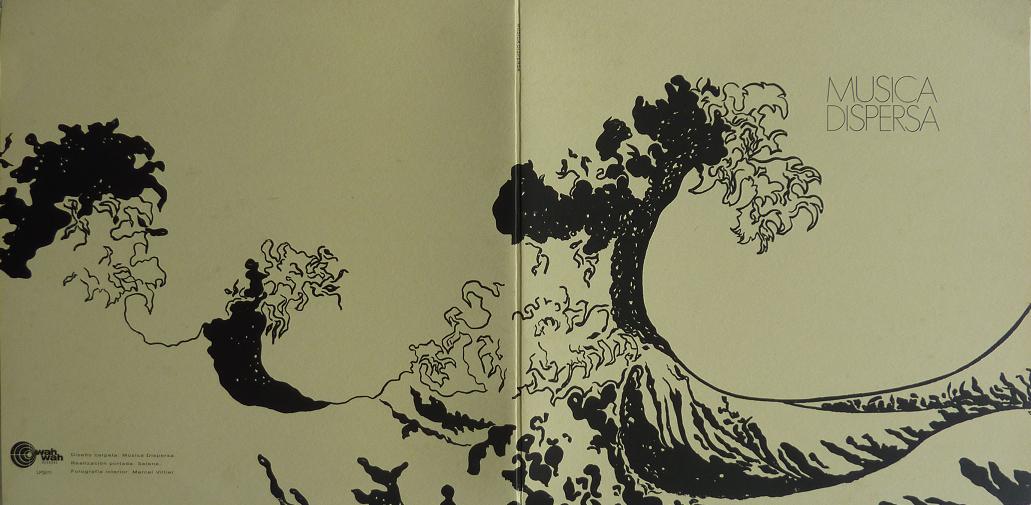
Loathe to miss the opportunity to broaden my musical horizons, I got Daniel to point me in the direction of some notable Spanish artists of the Franco era and he came up trumps. Following on neatly from my last blog entry, much of Boikot's stock consists of 180 gram vinyl reissues. I picked up a copy of Máquina!'s highly acclaimed debut LP, Why? from 1970 and Musica Dispersa's eponymous and sole album, also released in 1970, both beautifully reproduced by Wah Wah Records.


It seems that many of the bands of the era were intertwined, sharing members and accepting changing line-ups as part and parcel of contending with compulsory military service. Some came to view themselves as collectives rather than groups with a stable and fixed personnel. The impression I have is of a scene that was dynamic, constantly evolving, and that burned brightly but briefly. It is no exaggeration to suggest that artists such as Máquina! were as important to Spain's counter-culture as Bob Dylan was to that of the USA. Even the sleeve art to Why? was designed to provoke and rally opposition to Franco's regime. Apparently, Salvador Dali approved of the image of a pocket watch embedded in a croissant, a thinly disguised call for Spanish youth to realise that it was time to wake up to what was happening around them. The name Máquina! is itself confrontational, originating as it does from an expression whose meaning is perhaps too culturally specific to translate well, but was used by those doing miltary service. They would exclaim "Máquina! Dos cafés" (Machine! Two coffees), meaning something along the lines of "Fuck You".

Poster insert

 Why? is the type of album that bands only produce before the spectre of self-awareness causes them to compromise their art. Once bands begin to analyze what they are doing, the music they produce is rarely a true representation of what is in their souls. Why? comes across as an unedited stream of consciousness, a disgorging of ideas that had been left unexpressed prior to the moment that they were committed to tape. This makes for a somewhat schizophrenic album, but one that is never less than captivating. The opening cut, I Believe, comes across like Dave Brubeck's Take Five with incisive fuzz guitar: mannered coffee house jazz on a Haight-Ashbury trip. The listener is left unprepared for the title track that follows and plays out over two sides of vinyl as the band sets the controls for the heart of the sun. It is a jam, a glorious release, a flood of ideas purged in one take. It begins with a pleading, almost bluesy vocal after which the track becomes progressively unhinged with fuzz, wah-wah and Hammond all vying for attention, scything around the elastic bass lines and the drums which flirt with jazz before launching into a full-on tripped-out Burundi assault. The final track, Let Me Be Born, regains a degree of sanity with a throbbing, suspenseful bass line, an urgent vocal, wah-wah guitar and flute to the fore, ending the LP with an element of psychedelic funkiness.


Musica Dispersa are aptly named as their music stubbornly refuses to be pigeonholed. Is it Acid-Folk, Progressive, Avant-Garde, Psychedelic World Music...? Well yes, all of the above and more.


The LP opens with snorting and nonsensical muttering, setting the tone for an album that utilises vocals as another instrument rather than as a vehicle for lyrics. In the absence, for the most part, of a traditional drum kit, the bass player provides the glue that binds the music together with some beautifully engaging rhythms. Various hand percussion, slaps and claps add rhythmic texture throughout.

Musica Dispersa

 After just a handful of listens, one of the tracks that has made the biggest impression on me is Gilda, a dreamy, meandering, piano-led tune with a vibe not dissimilar to an even more chilled Planet Caravan. I bet that's the first time anyone's ever compared Musica Dispersa to Black Sabbath! Rabel sounds like something from a North African souk, whilst Cefalea, with its hypnotic rhythm, Cherokee chant and up-front Jew's harp twang, sounds like something the Beta Band soaked themselves in before hitting the recording studio. Arcano, the only track with a 'traditional' drum kit backing throughout, bounces along on a superb, almost dub-like bass line and features Hare Krishna-style chanting and snake-charmer flute. Listen to this bass groove and tell me that Damon Albarn and his Gorillaz didn't sit up and take notice of this LP.